

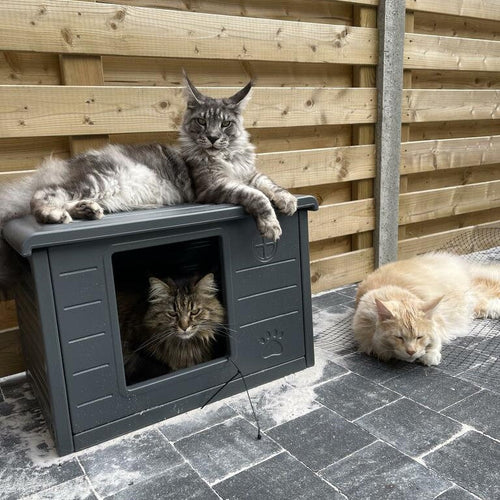

Your cat often lies around sleeping alone. Stares out the window for ages. And sometimes meows just a little more than usual. That’s when the thought naturally pops up: “Is my cat maybe lonely?” And honestly, that’s not a strange question at all. You’re often out (work, groceries, the gym…) and your cat is home alone. So the idea of getting a second cat feels logical. Surely my cat would enjoy having a friend? But here’s the important nuance: when is a cat truly lonely? And when do we think that simply because we’re imagining it in a human way? This week, we’ll break it down for you.

Are cats naturally lonely?

Cats aren’t pack animals like dogs. In nature, they often live alone, or in small loose groups where they decide for themselves how much distance they keep. That said, cats aren’t automatically cold or antisocial either. Many cats are semi-social and do enjoy contact but only when it feels safe. In short: some cats thrive with company, while others get stressed from “too much” social stimulation. It really depends on their personality.

How do you know if your cat is actually lonely?

This is where it gets tricky: cats don’t express emotions the way humans do. They won’t sit there looking pitiful with a dramatic expression or obviously act “sad”. But cats do give signals: they’re just often subtle. So don’t see them as a hard diagnosis, but as signs that something might be missing (contact, safety, stimulation or routine).
Pay close attention to changes in behaviour, such as:

  • Meowing more than usual
    Especially when you’re leaving or when you come home.
  • Overly clingy behaviour
    Constantly following you around, not being able to settle, getting restless when you create distance.
  • More destruction or mischief
    Extra scratching, knocking things over, hyper behaviour without a clear reason.
  • Sleeping excessively + showing little interest
    Cats sleep a lot, yes. But if your cat seems uninterested in everything, it could also be boredom or stress.
  • Playing less
    Even with their favourite toys or interaction: little to no response.
  • Toileting outside the litter tray
    Peeing or pooing outside the tray is often stress-related.
  • Over-grooming / bald patches
    A classic stress signal you should take seriously.
    Note: if your cat’s behaviour suddenly changes, always check for medical causes too. A cat in pain can also start acting differently.
So is it loneliness or boredom?

Many cats aren’t truly lonely: they’re understimulated. And from the outside, it can look exactly the same: they meow more, cling to you, or cause “chaos” around the house.
A simple first step (that often already makes a big difference):
• 5–10 minutes of active play every day
• extra climbing spots / a view outside
food puzzles, treat games or brain game

Choose what suits your cat

Do you notice your cat becomes calmer and starts to “come alive” again? Then your cat probably just needed more challenge, not a feline friend. Do the signs continue even with extra stimulation and routine? Then your cat might genuinely need more social contact. But don’t rush into getting a second cat just for company: for some cats, that actually means stress. So look closely at what suits your cat, and base your decision on what truly makes them happier.

Would you get a second cat if your cat seemed lonely?

Let us know in the comments!

Leave a comment

Please note, comments need to be approved before they are published.

Don’t want to miss a thing?

Sign up for our Purrs & Paws blog packed with tips and inspiration for cat owners like you!